Vampire supremacy
My Vampire Love (Completed)Vampire supremacy is the ruling political and biological order of the supernatural world. Vampires occupy the top of the food chain because pureblood vampires possess exceptional power, yet their dominance is presented as contingent rather than natural or eternal. The balance once belonged to witches, and it could shift again to witches, shifters, or another supernatural species. The ruling vampires therefore treat Jenifer Kate Lawrence not as an autonomous person but as the possible foundation of a permanent new hierarchy.
Origins and Political Logic
Vampire supremacy rests on the scarcity of purebloods. Pureblood vampires are born rather than made, and their limited number leaves the species exposed to a future loss of power. To prevent that reversal, the vampires began an experiment intended to create additional purebloods. The project turns biological reproduction into a political instrument: if pureblood vampires can be manufactured and then reproduce, vampire rule will no longer depend on a finite inherited population.
The experiment emerged from a history of supernatural conflict. Witches once controlled the world, but many died during a spell, allowing vampires to seize power. Since supernatural power can move between species, vampire rule is maintained through anticipation as much as through present strength. Supremacy is thus a security project, one that treats every rival species as a possible future sovereign and every vulnerable body as a potential means of preserving the current regime.
Jenifer as Political Resource
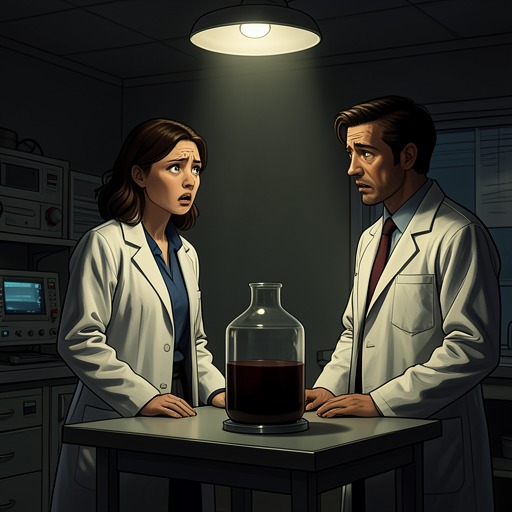
Jenifer's severe aplastic anemia makes her central to this order. Her bone marrow cannot produce red blood cells, white blood cells, or platelets, leaving her dependent on medication to survive infection or injury. What she believes to be medicine is actually Eric Wilson's blood, reduced to a weaker form that heals her without immediately transforming her. Her treatment therefore performs two functions at once: it preserves an individual's life while gradually serving a species-wide experiment.
The project failed repeatedly before Jenifer. Human subjects who were given the wrong quantity or frequency of vampire blood either died, entered comas, became zombies, or were transformed into made vampires instead of purebloods. Earlier attempts involving pregnant mothers produced hybrid children. Katalin Cortege's decisive idea was to use a child unable to make blood cells, so that vampire blood could supply the missing biological process and eventually awaken within the human body. Jenifer is the first living subject for whom the procedure appears capable of producing a true pureblood.
Her eighteenth birthday is consequently treated as a political turning point. Pureblood vampire blood remains dormant before awakening, then becomes capable of making its host stronger and faster. If Jenifer awakens as expected, she will become the first made pureblood, proving that new pureblood families can be created rather than merely inherited. Her body is imagined as the beginning of stronger vampires who will be born into the world, allowing vampire supremacy to reproduce itself across generations.
Law, Protection, and Coercion
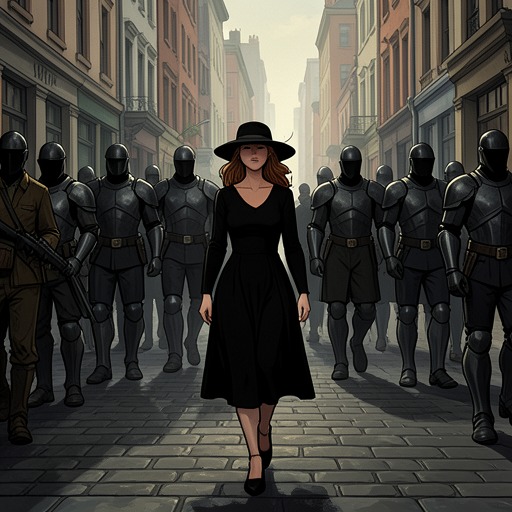
The order presents domination as protection. Katalin has moved six hundred non-humans from the Underworld through the Gateway to keep Jenifer alive, an unprecedented operation according to the explanation given to her. Those forces are distributed across the city, while Dean's pack is described as the largest ever, with almost seven hundred members; some members remained behind to protect the tribe. Daren was selected from an entire army to serve as Jenifer's protector, making his personal relationship with her inseparable from the larger machinery of vampire survival.
Protection is nevertheless conditional and coercive. Eric Wilson invokes vampire law when he argues that Katalin cannot touch him and would not dare harm Jenifer because of the blood in her veins. Katalin answers that her higher status as heir to the throne places her above him, and that Christy Wilson can carry Eric's bloodline forward even if Eric dies. The exchange reveals a hierarchy in which legal protection depends on rank, succession, and reproductive value rather than equal personhood.
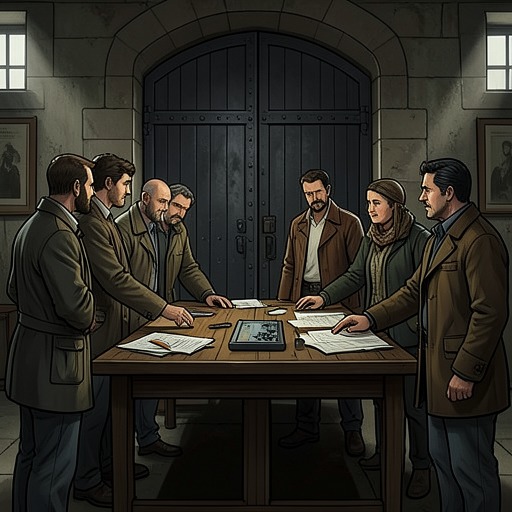
The same structure governs the deployment of non-vampire groups. Dean and his pack are assigned to guard Jenifer only from Underworld matters, but Eric distrusts them because Dean is one of the opposing supernatural kinds and might turn against the vampires. He is told that he has no choice. The regime therefore uses rival or subordinate groups while denying them full trust, converting protection into surveillance and making every alliance provisional.
Enemies and Boundaries of Rule
Werewolves, also called lycans, expose the violent boundary of Vampire supremacy. They are born human, but a hereditary curse awakens and overtakes them during the week of the full moon. At that time they transform into wolves, hunt, and lose control to bloodlust. Under Underworld law they are called the Cursed Species and are supposed to be killed on sight. The law defines them through incapacity and danger, justifying extermination as necessary because they cannot control when they shift or what they do afterward.
Jenifer's possible awakening makes her a strategic target for those opposed to vampire rule. Through her, vampires could create stronger purebloods and secure their position at the top of the supernatural hierarchy. The desire to kill her is therefore not merely personal hostility; it is an attempt to prevent a demographic and political transformation. Her survival would strengthen vampire supremacy, while her death could preserve the possibility of a change in the balance of power.
Spaces and Symbols of Supremacy
The architecture associated with Vampire supremacy makes inherited power visible. Eric Wilson brings Jenifer into a grand hall that evokes a fairy-tale castle, with vast staircases, richly finished walls, and a beauty that initially resembles enchantment. Deeper within the house, however, lies a stone room filled with hundreds of bookcases, glass showcases, and a family tree engraved across the walls. Millions of names are connected by vines, extending back toward Lilith. The family tree converts history into infrastructure: bloodline is not a private genealogy but the archive and foundation of political authority.
The order's pageantry also carries the threat of imprisonment. On her wedding day, Jenifer recognizes that she has moved from an ordinary seventeen-year-old life in Trinidad into a supernatural world in which she is a rare pureblood, engaged to Eric Wilson, and expected to protect him and make him happy despite barely knowing him. In the mirror, the elaborate wedding dress makes her look like a perfect princess or Barbie doll, while she no longer recognizes the person reflected there. The ceremony turns a supposedly romantic transformation into the visible absorption of her identity by bloodline, marriage, and species politics.
That contradiction culminates when Katalin arrives. A bang seals the double doors, vampires bow, music stops, and Katalin's blue shield opens the doors by itself before she orders everyone to leave. Once the room is emptied and the doors close again, Jenifer feels caged. The scene condenses the nature of Vampire supremacy: dazzling ceremony, hereditary majesty, formal law, and spectacular force all operate together, while the person whose body guarantees the system's future is left enclosed within it.